

What I worked on

  • Product design
  • UX Research
  • UX design
  • Graphic design

Shifting the mental model around credit cards away from costly rewards.

CardFit helps users compare the real cost of credit cards, shifting focus from flashy rewards to financial impact. Designed to give credit unions a competitive edge, the platform encourages data-driven decisions that prioritize transparency and trust.

Designing for comprehensive comparison

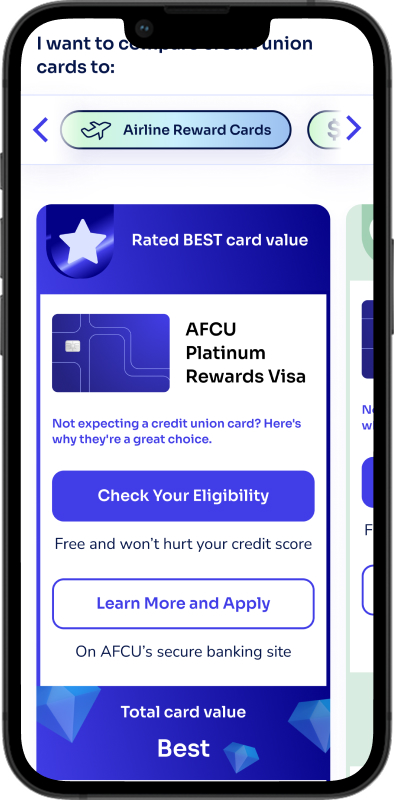
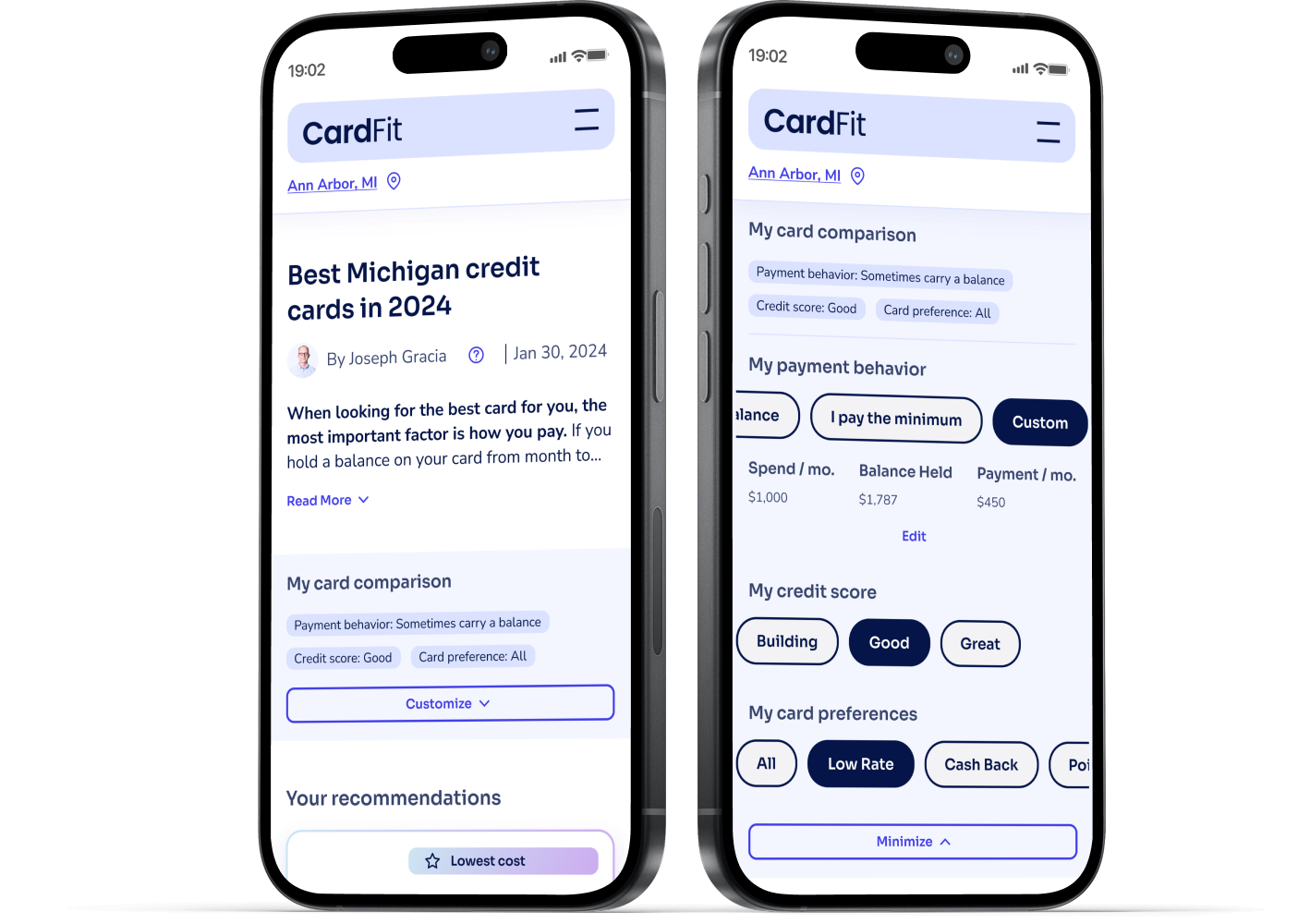
Early analytics showed that most users preferred accessing financial tools on their mobile devices. I designed CardFit with a mobile-first approach, building functionality around familiar interaction patterns found in other digital products. Users can swipe horizontally to compare cards, use filter chips to select their preferred reward types, and scroll vertically to reveal more detailed information.

Ultimately, we were challenging decades-old mental models around credit cards. Rewards programs have become a culturally ingrained expectation, shaping how consumers perceive value. The question became—

"How might we communicate the true cost of rewards programs without obscuring the information consumers expect to see?"

Our early hypothesis was that simplifying comparisons by showing only cost vs. reward equations would make the real cost of ownership clearer. However, user testing revealed that hiding too much detail reduced trust.

Users wanted transparency to feel confident in their decisions.
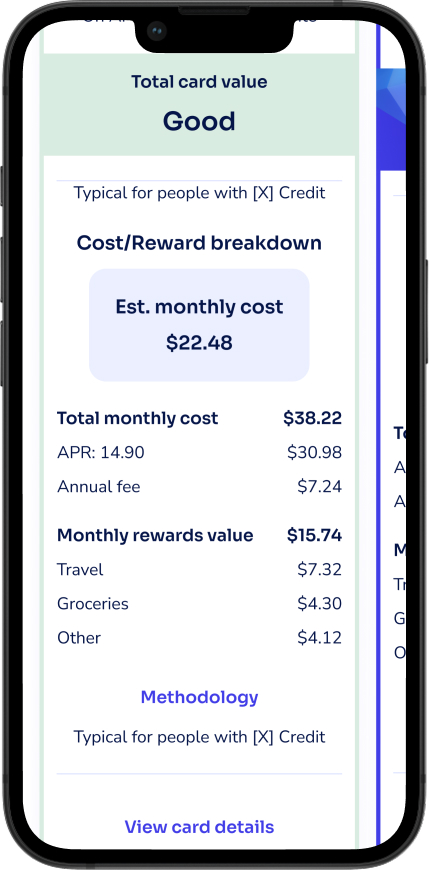
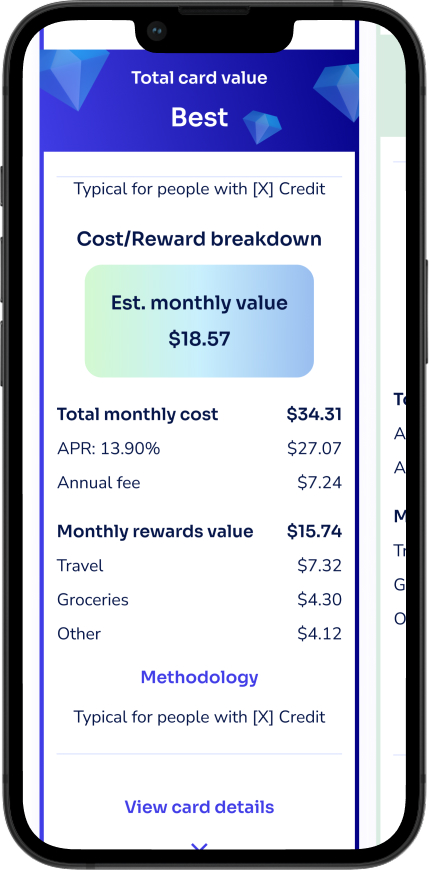
We refined our approach to show all relevant card details—interest rate, rewards rate, and fees—alongside a simplified cost equation. The result increased trust and led to over 9,000 unique credit pulls in the first year.

Designing for conversions

Visual indicators for best card

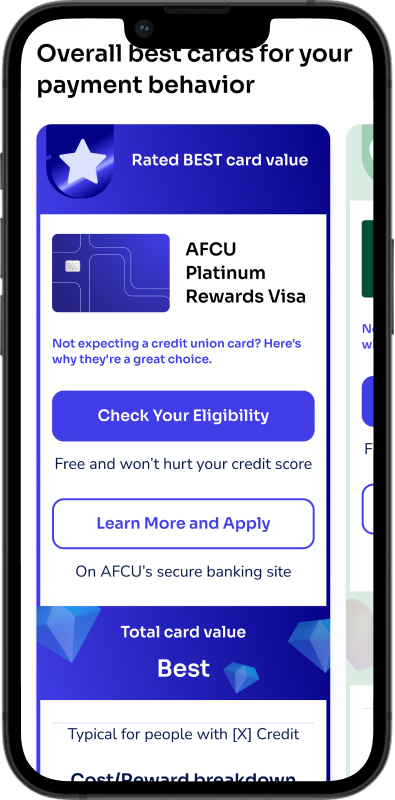
The goal for the comparison cards was to help users quickly recognize the best or most cost-effective options. I applied the Von Restorff Effect to create clear visual differentiation between choices.

A bold, brand-aligned gradient and subtle graphic enhancements highlight the top option, while soft green and orange accents distinguish good and costly cards respectively.

Describing card cost plainly

Refining how card costs were displayed took several rounds of user testing and iteration. Our initial minimalist approach lacked the context users needed to feel confident in their comparisons. Through discovery sessions, we learned that clarity mattered more than brevity. The final design balanced simplicity with transparency, presenting key data points—interest rate, annual fee, and rewards—at a glance without overwhelming users.

Refining personalization

To make card comparisons meaningful and actionable, we introduced personalization through user-input financial details.

Early testing revealed that our initial, highly detailed rewards-based approach felt cumbersome and intimidating. We simplified the flow to request only essential information, making the experience faster, more approachable, and still accurate enough to deliver useful recommendations.

CardFit Wins

Although CardFit faced challenges in defining a scalable profit model, the project achieved several significant milestones. Through focused product development and a clean, user-centered experience, we successfully partnered with 20 credit unions nationwide, generated nearly 60,000 unique visits, and delivered over 9,000 credit-pull leads to our partners.

Constraints

While CardFit generated strong engagement and early traction, several organizational and industry factors limited its long-term scalability.

The decentralized structure of credit unions made unified growth challenging, and backend integration limitations prevented seamless lead handling.

Misalignment in UX priorities between leadership teams slowed iteration, and limited development bandwidth constrained how quickly we could respond to user feedback.

These challenges underscored the importance of early alignment between product, design, and engineering, as well as building for scalability from the start. They also reinforced the reality that even strong UX can only succeed within a sustainable business and technical framework.

Let's Work Together

I'd love to chat about how I can support your UX needs

Get In Touch